We can thank all the bees
And thank all the worms
For the soil, the flowering Spring
For the soil, the flowering Spring…
A short and pleasant drive up from the Harbour, with the Baltic blue to one’s side, will lead the curious visitor to a multifaceted and intriguing area in Tallinn’s periphery : Mary’s Hill, or Maarjamäe. A castle, museums, memorials, playgrounds…
A lot of Estonia’s modern history is mirrored in the projects and uses of this coastal area. There seems to be no better place to introduce you to Estonia’s recent past than Maarjamäe. As it does in Estonia, hopefully in this article too: the arc bends towards hope.
THE SOVIET MEMORIAL
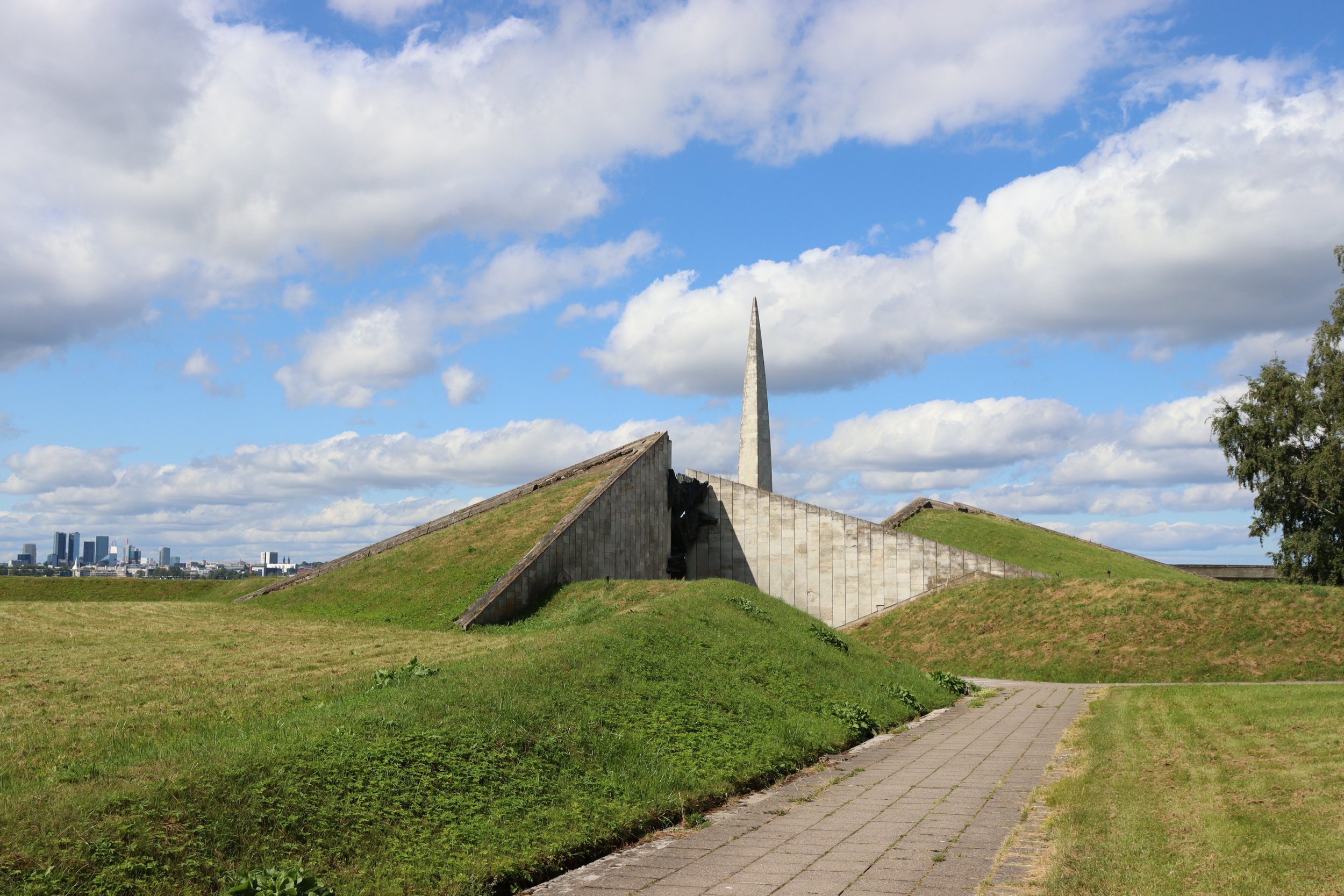
Memorials: this one makes a clear point
The 35 meter obelisk you can see above was erected here in 1960 by the authorities of the USSR. It commemorates the “Ice Cruise”, an evacuation of Russia’s Baltic fleet from Tallinn (Reval at the time) in 1918 to the East. As the German troops were closing in on land, icebreakers led the way, allowing several warships, merchant vessels and submarines to avoid capture.
As an aside, this arrival and subsequent departure of German forces towards in 1918 set the stage for Estonia’s victorious war of Independence against Bolshevik Russia, which ended in 1920.
The rest of the complex was finished in 1975 and more generally celebrates Soviet fighters, notably those who died fighting Nazi Germany in the second world war.
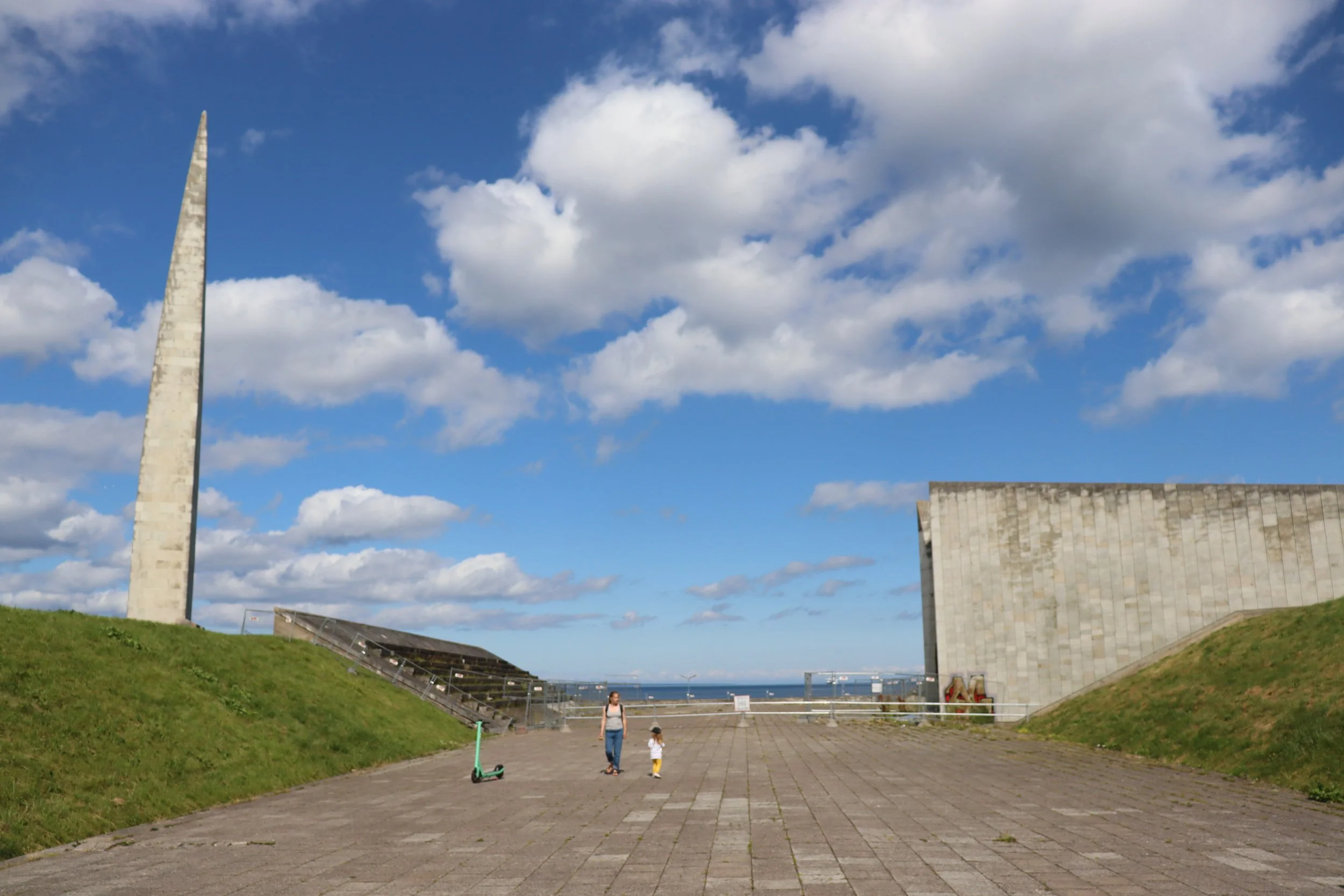
A great big space for a great big party (the Soviet one)
Russian communist control lasted in Estonia from 1944-1991, after an early and dramatic taste of things to come from 1940 to 1941.
Considering the oppression imposed upon the Estonian people during these times, there is here something quite incredible to behold:
this complex is still standing.
For which visitors can be grateful. It is pleasant to walk through, it is architecturally somewhat creative and elegant; it bares witness to a testing time now overcome.
Furthermore, the city of Tallinn and its best and brightest have come up with the most perfect answer to the conundrum of a culturally motivated Soviet construction:
The estonian memorial
Plant me an Apple Tree
On the good old soil of Home…
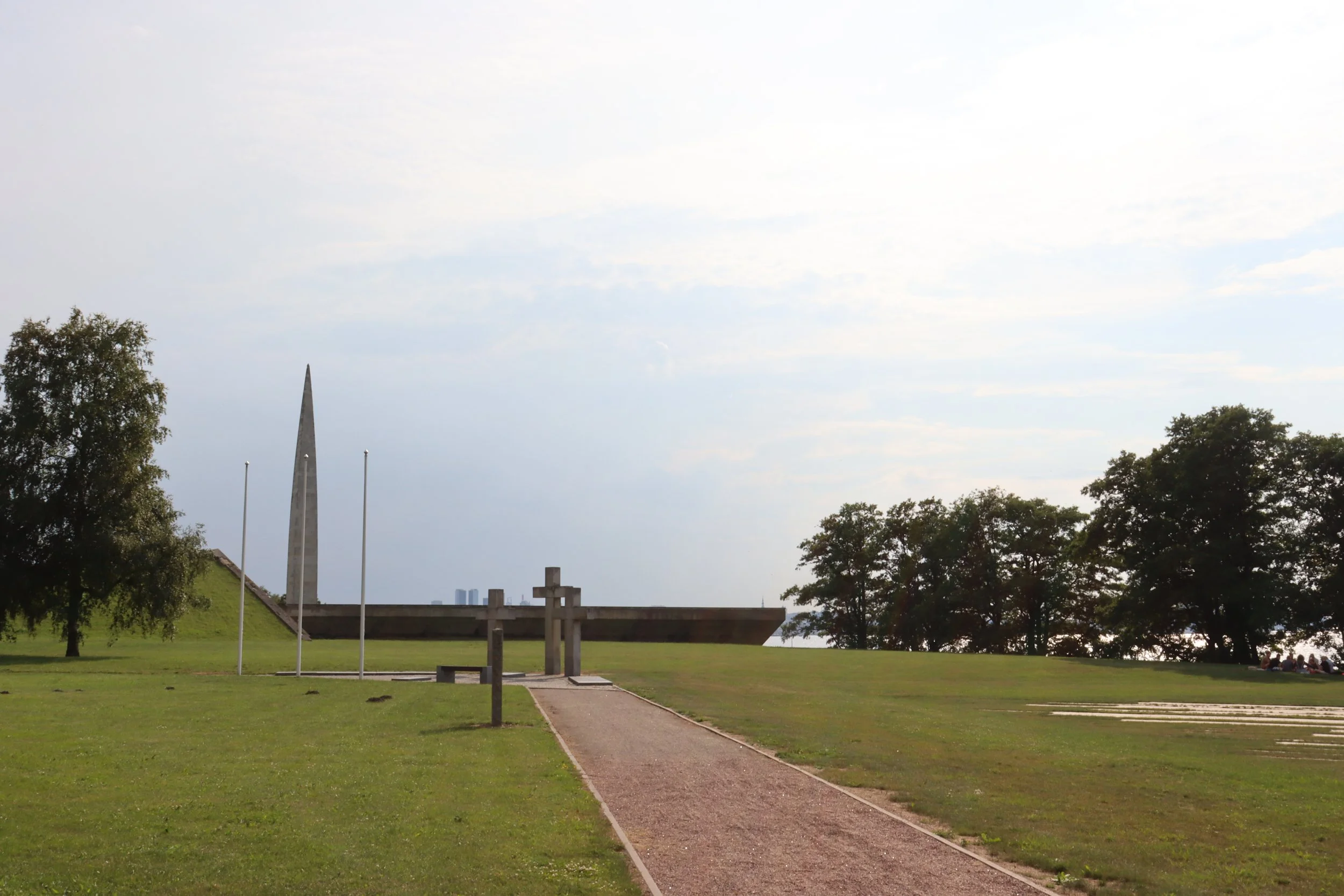
Go still further…
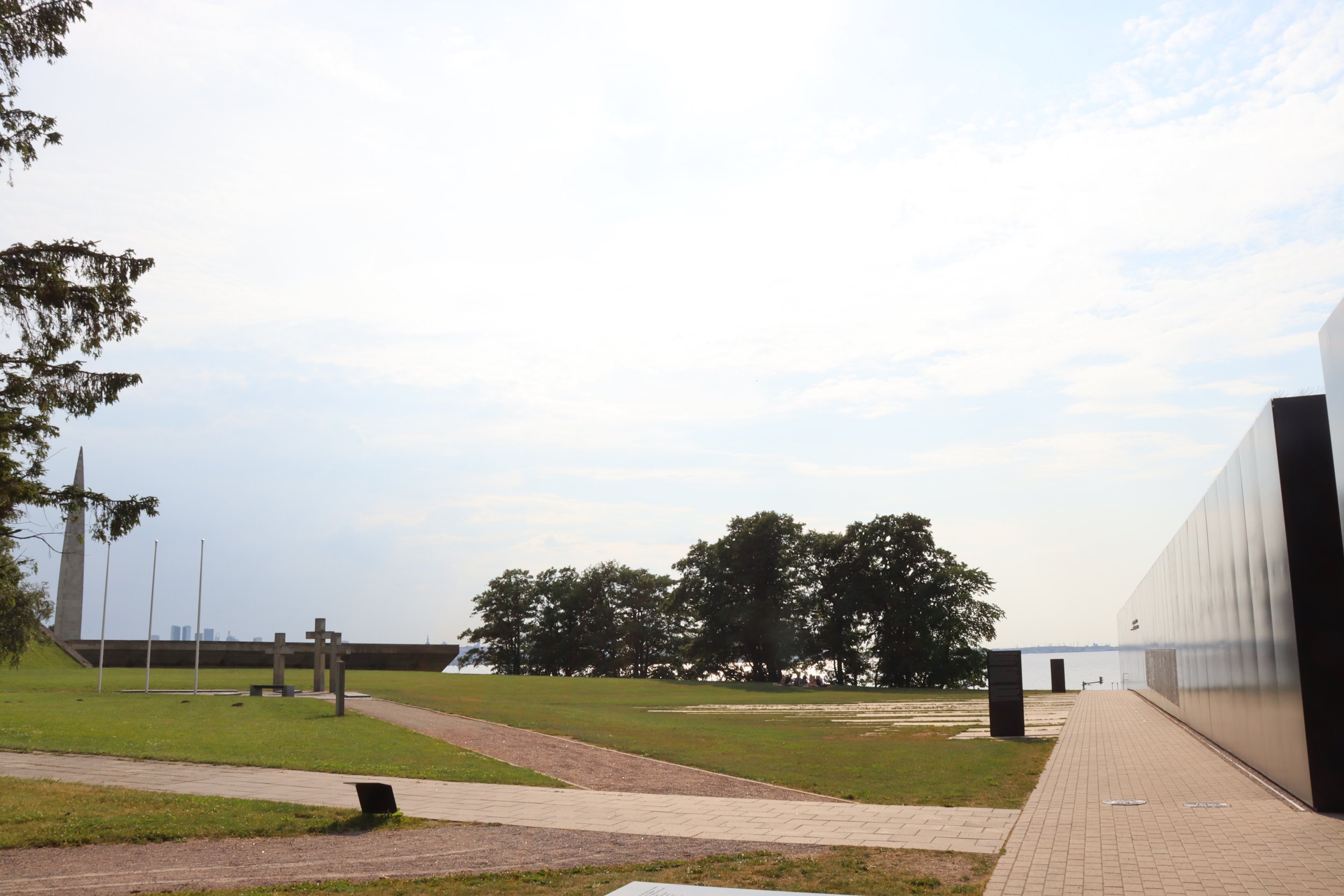
… and turn, turn, turn.
Just behind the Soviet constructions…
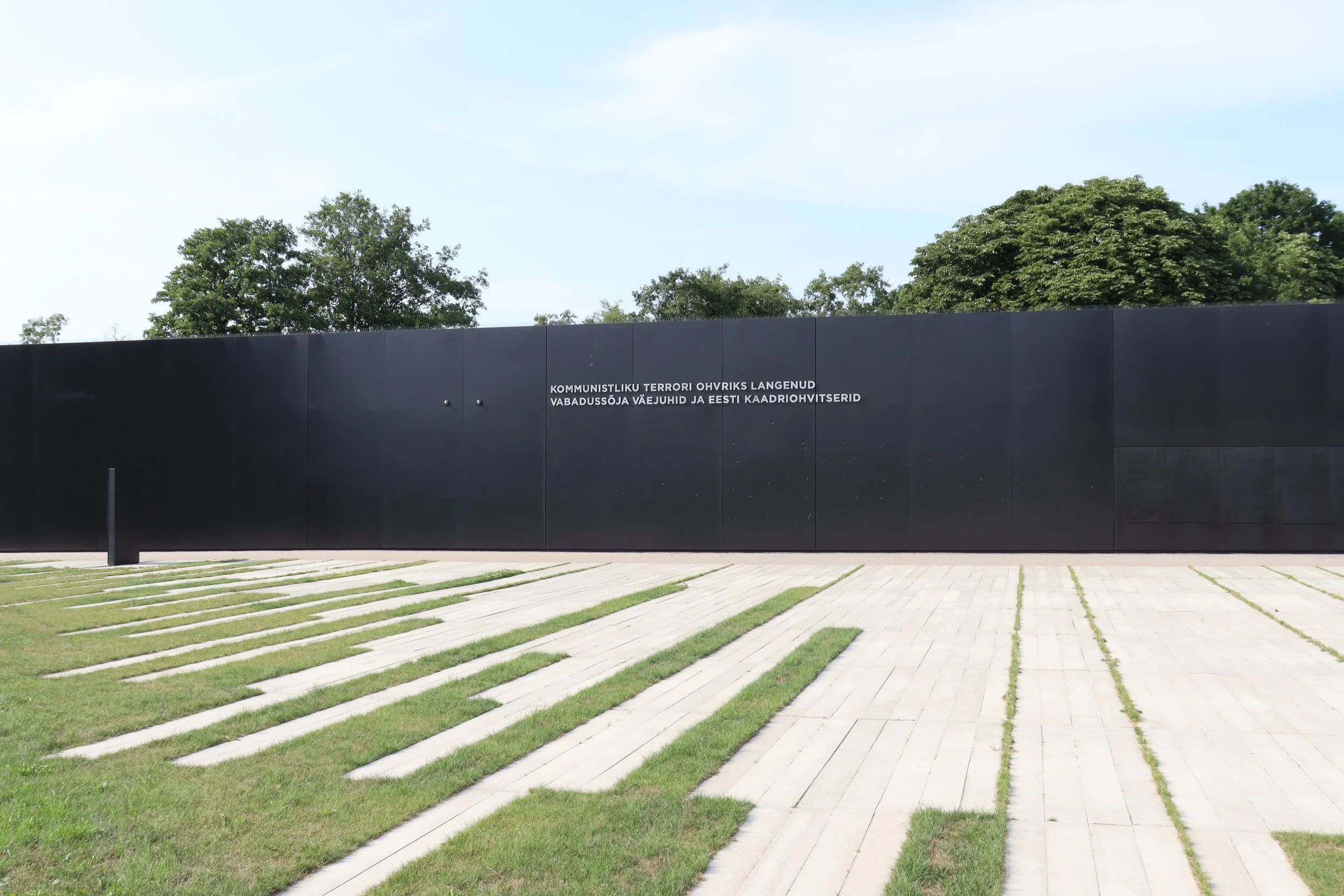
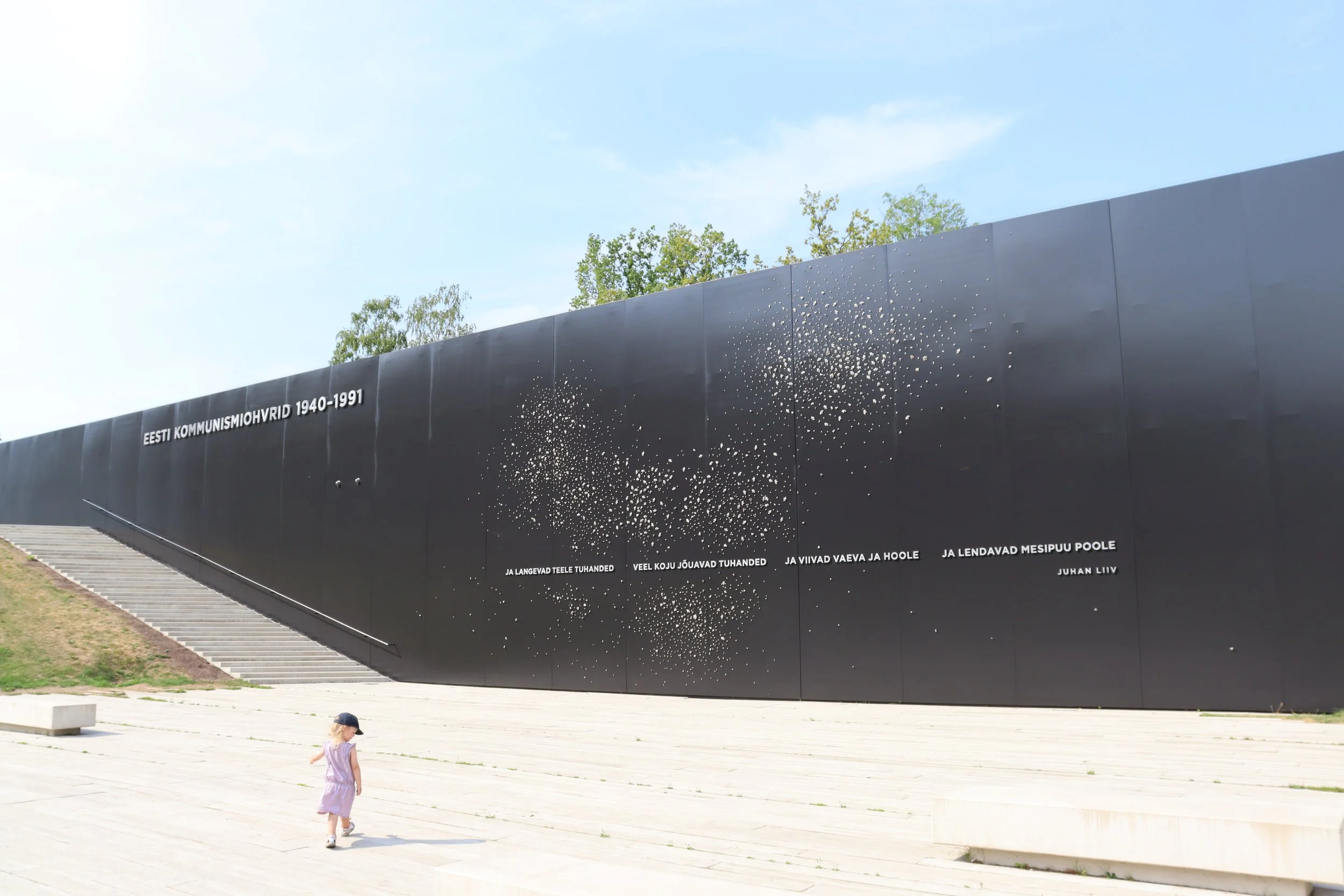
“Victims of communist terror: leaders of the War of Independence and Estonian officials” says the wall.
… and since its inauguration in 2018, the Estonian Memorial for the Victims of Communism now quietly makes its point through architecture and spatial design. The walk up from the sea starts within the confines of oppressive high black structures.
More than 22.000 names are etched into these walls.
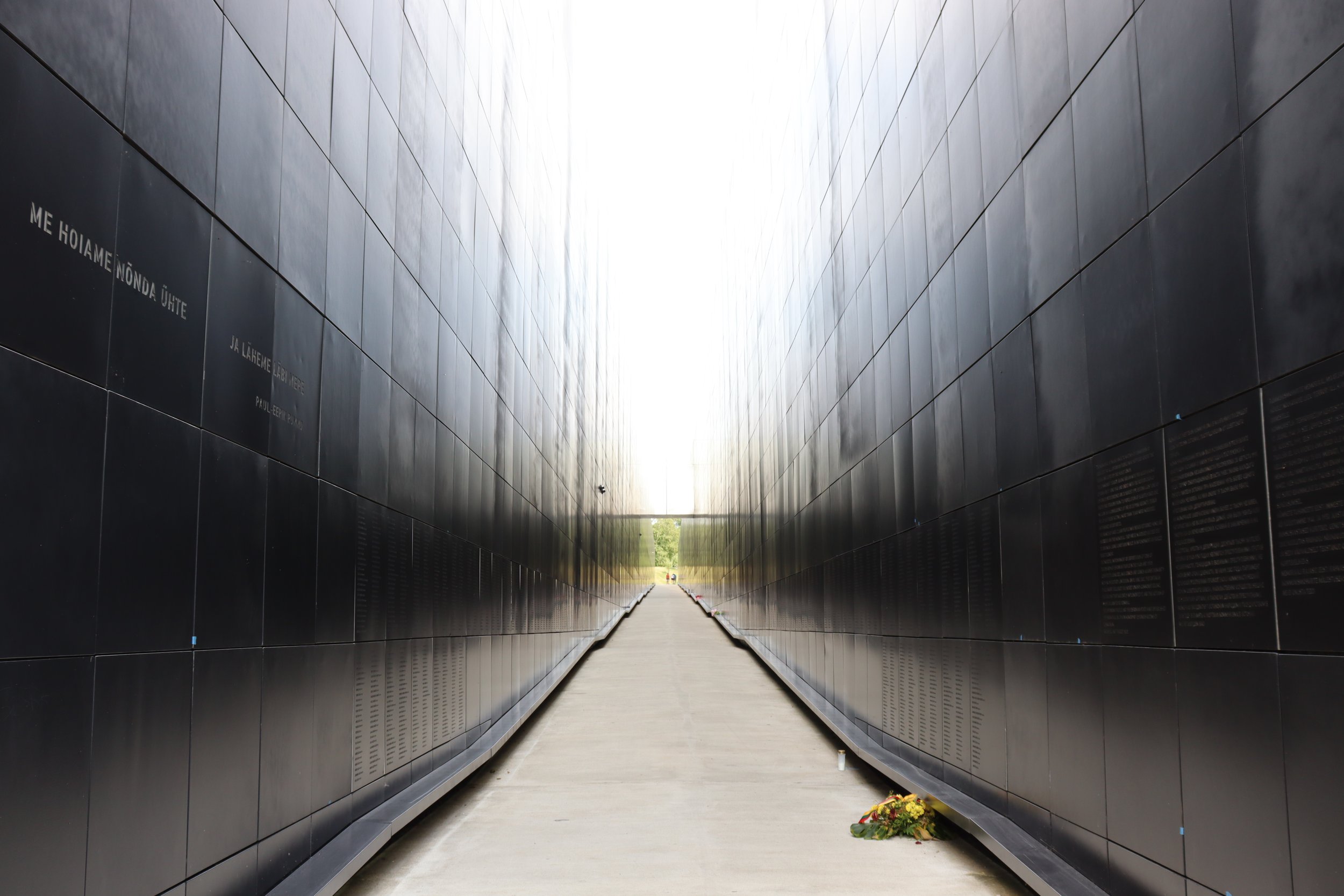
“Yea, though I walk through the valley of the shadow of death…”
And once freed into the light at the top of the hill, there is a garden:
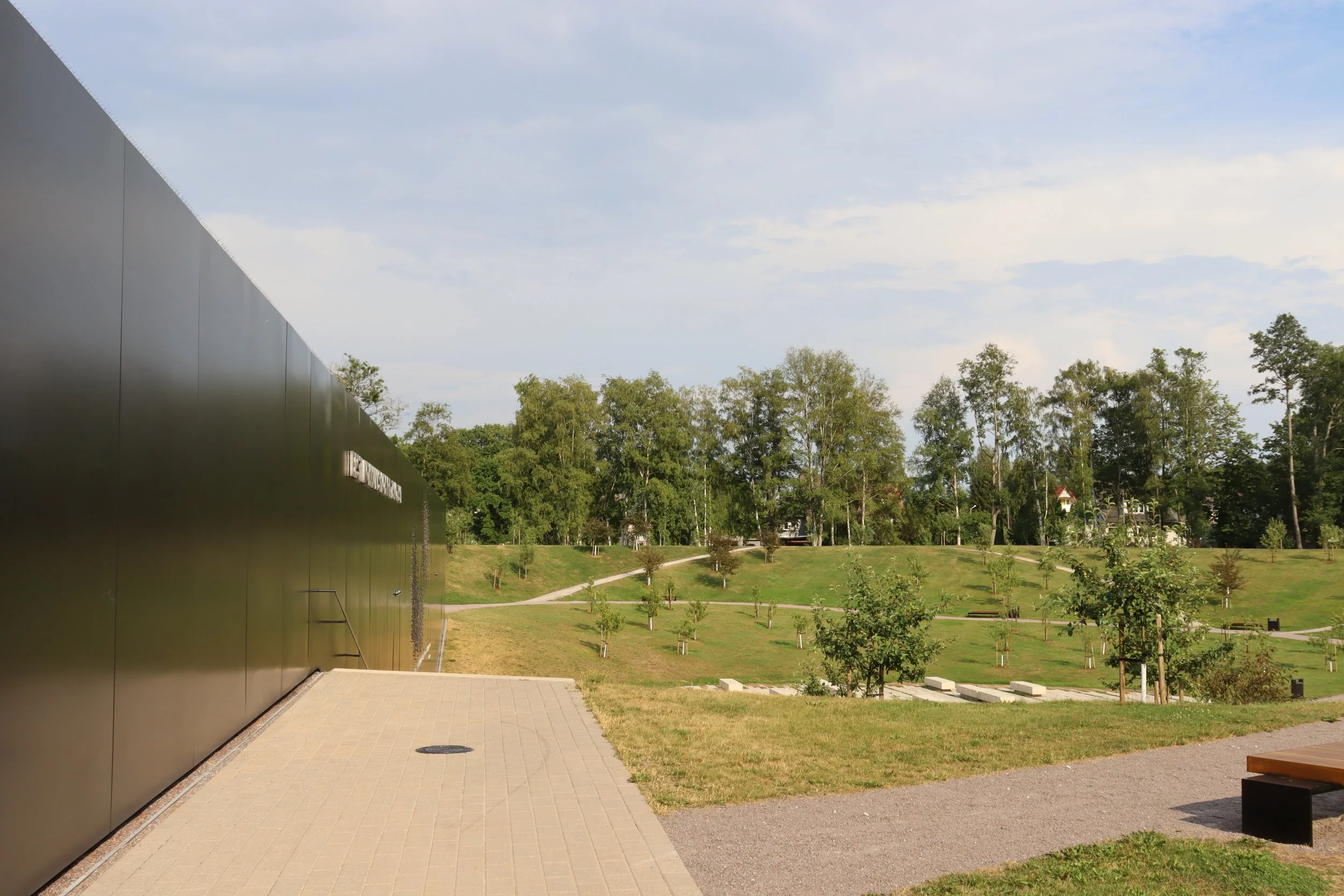
“Watch it grow, and when Autumn’s here…”
An orchard. A patch of hope and growth.
What grace displayed by the Estonian people here, to intimate that, not by the tearing down of one’s past, but by the planting of seeds is one’s highest interest nurtured. Sowing peace, not waging war, they let the grace of Nature do the talking about their faith in the future.
This is not by accident, and will be developed in further articles.
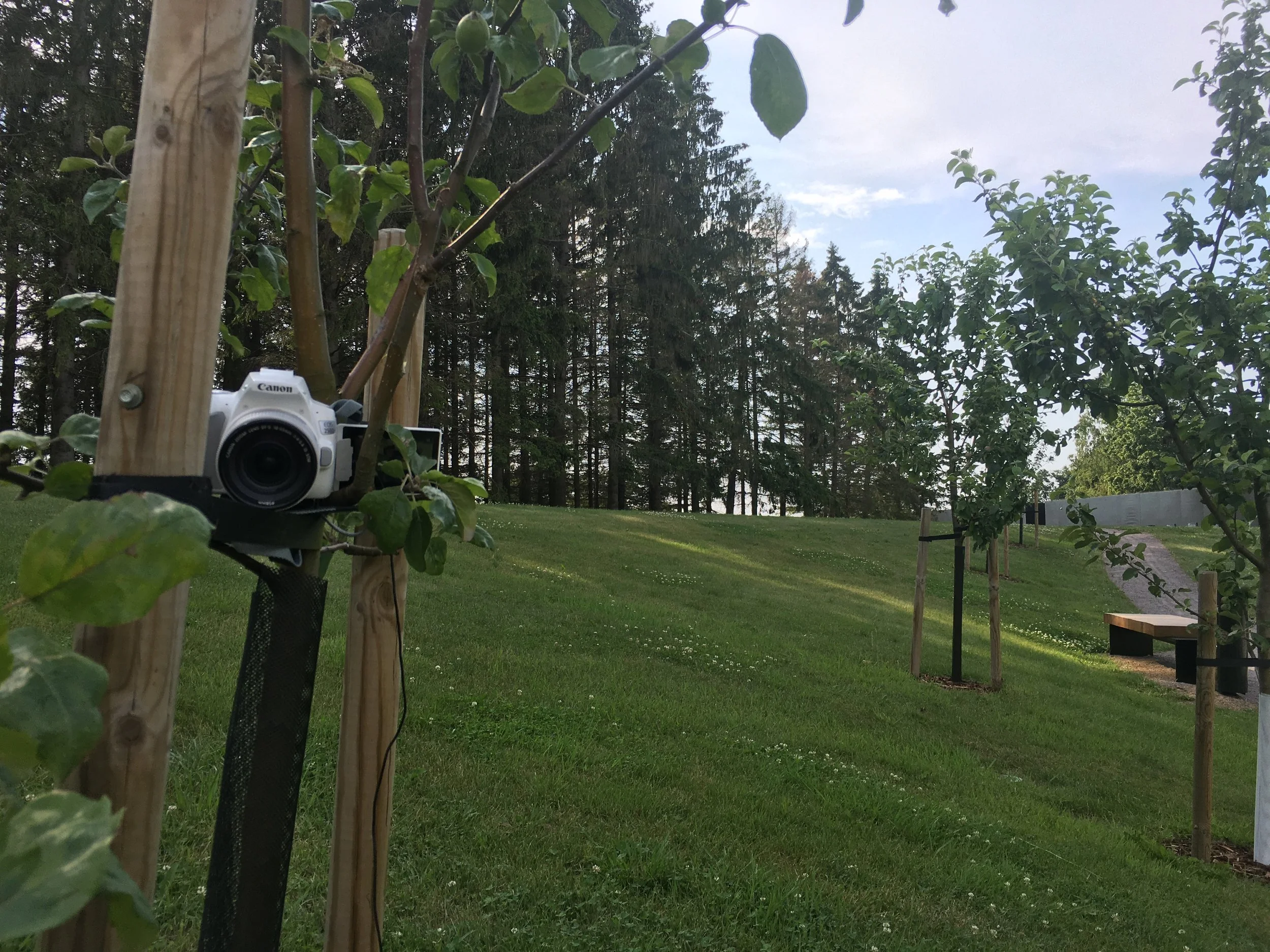
My cameraman, a budding professional. Looking to branch out.
Maarjamäe CASTLE and Film Museum
The residential Castle built by Russian imperial noblemen now houses the Estonian History Museum’s discovery center. Great t-shirts in the gift shop.
The bittersweet history of the Estonian people is here on full display: from the heavily repressed 1905 revolution demanding reforms from the Tsar’s regime, to the struggles of 1917 leading to their first period of independence until 1940. And then from Soviet control to emancipation.
If you’re there, sit back in the big hall and enjoy an incredibly artistic and humorous 180° history of Mary’s Hill. As you know, it also tells Estonia’s story.
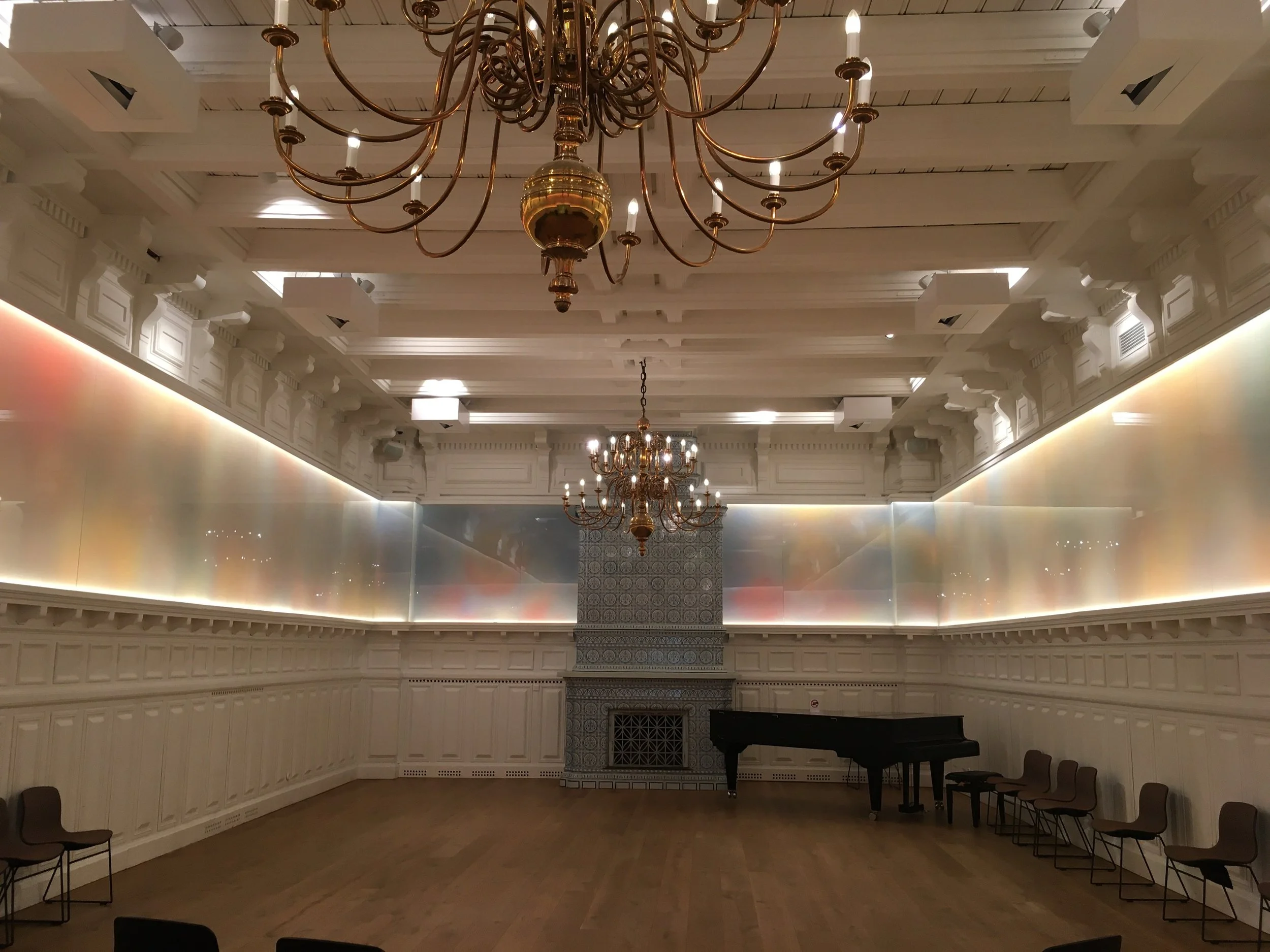
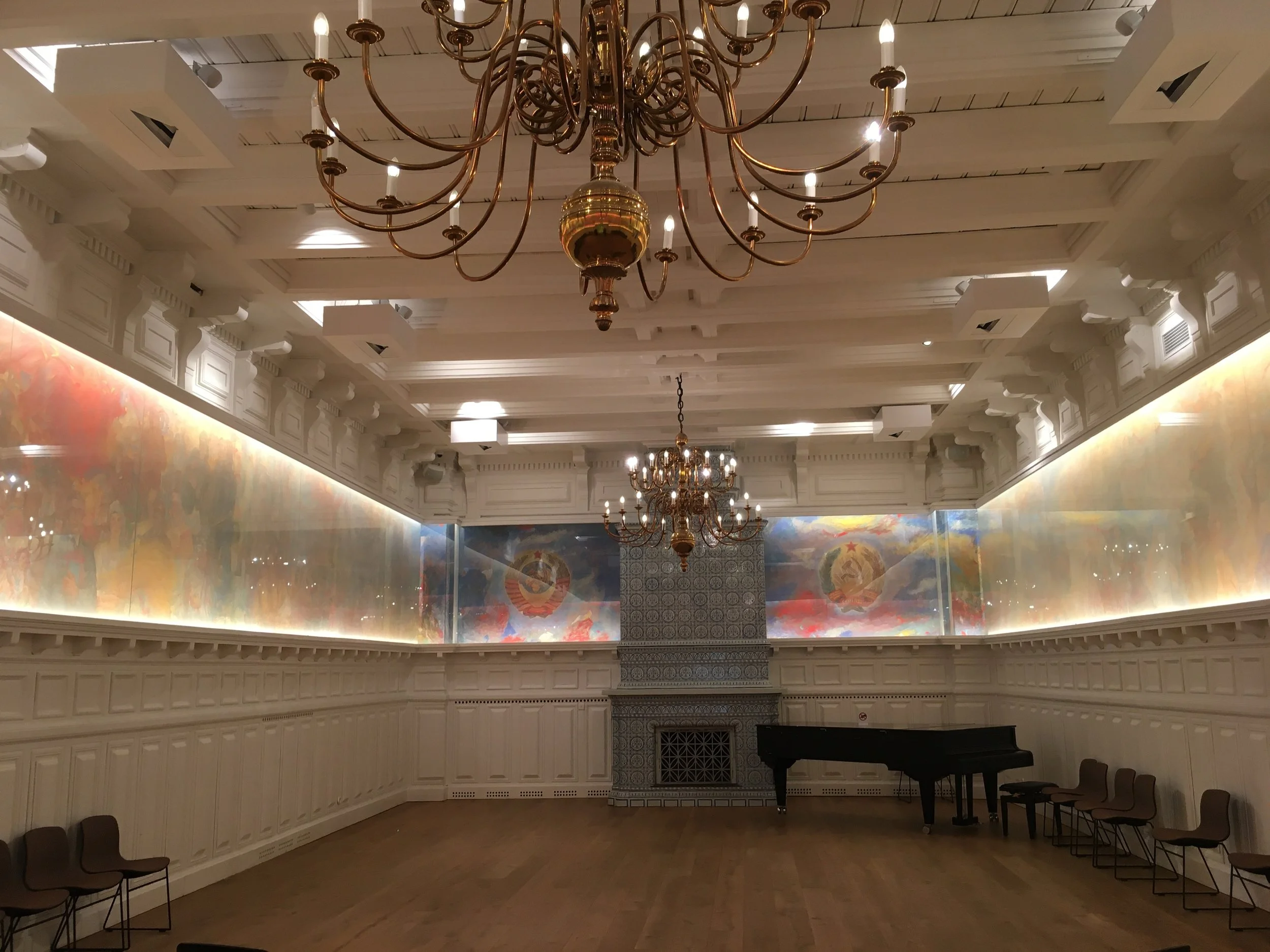
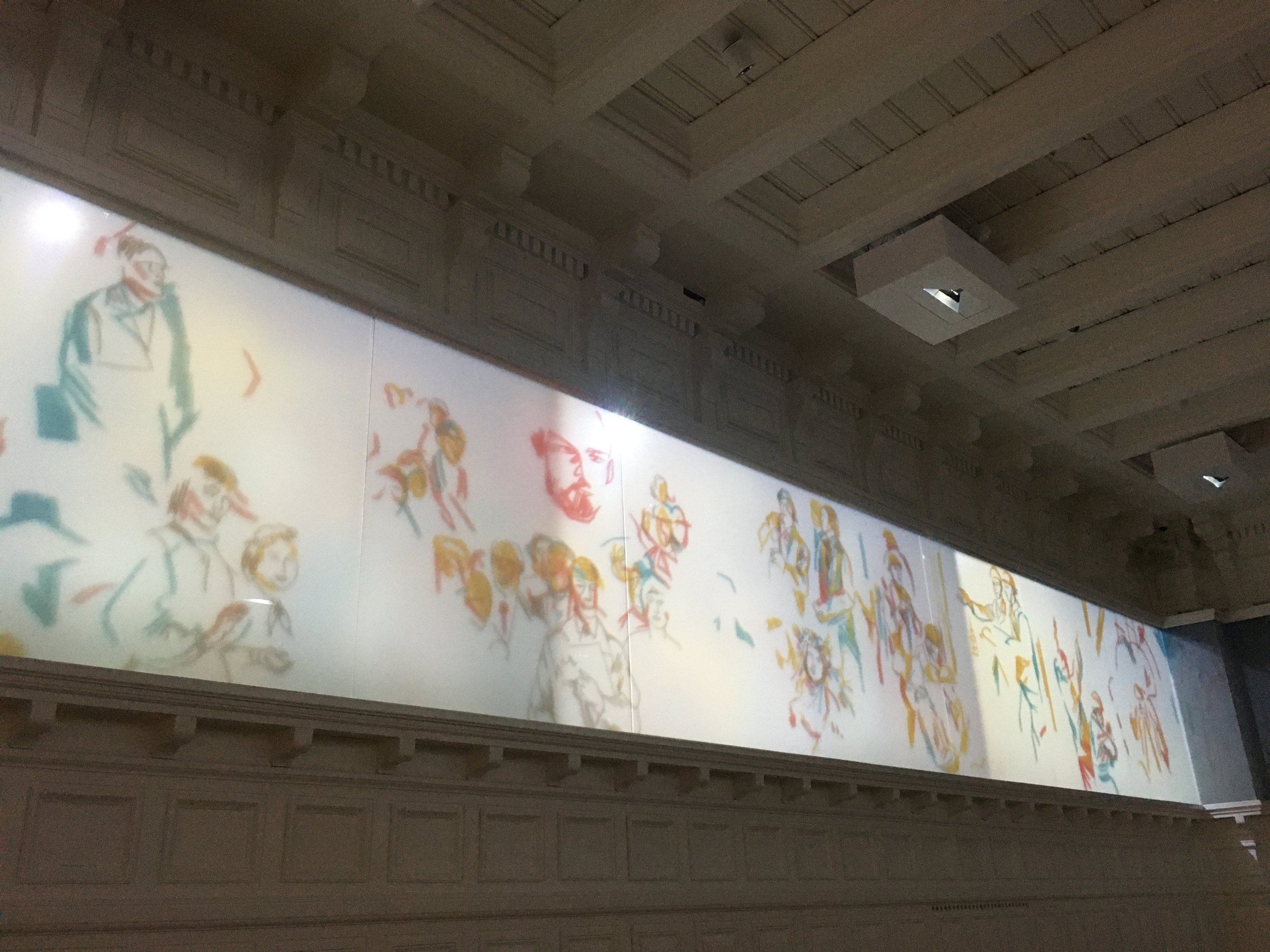
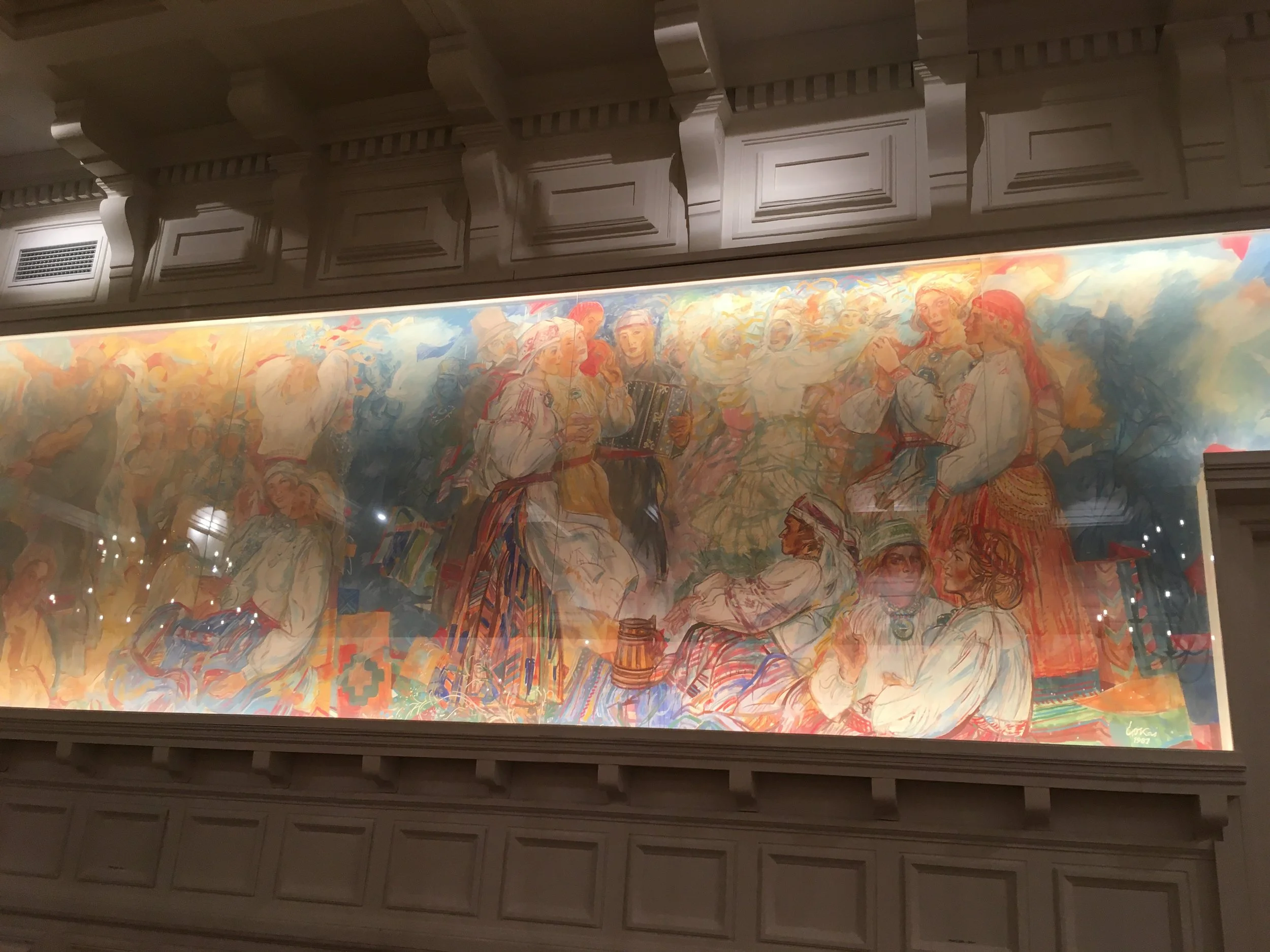
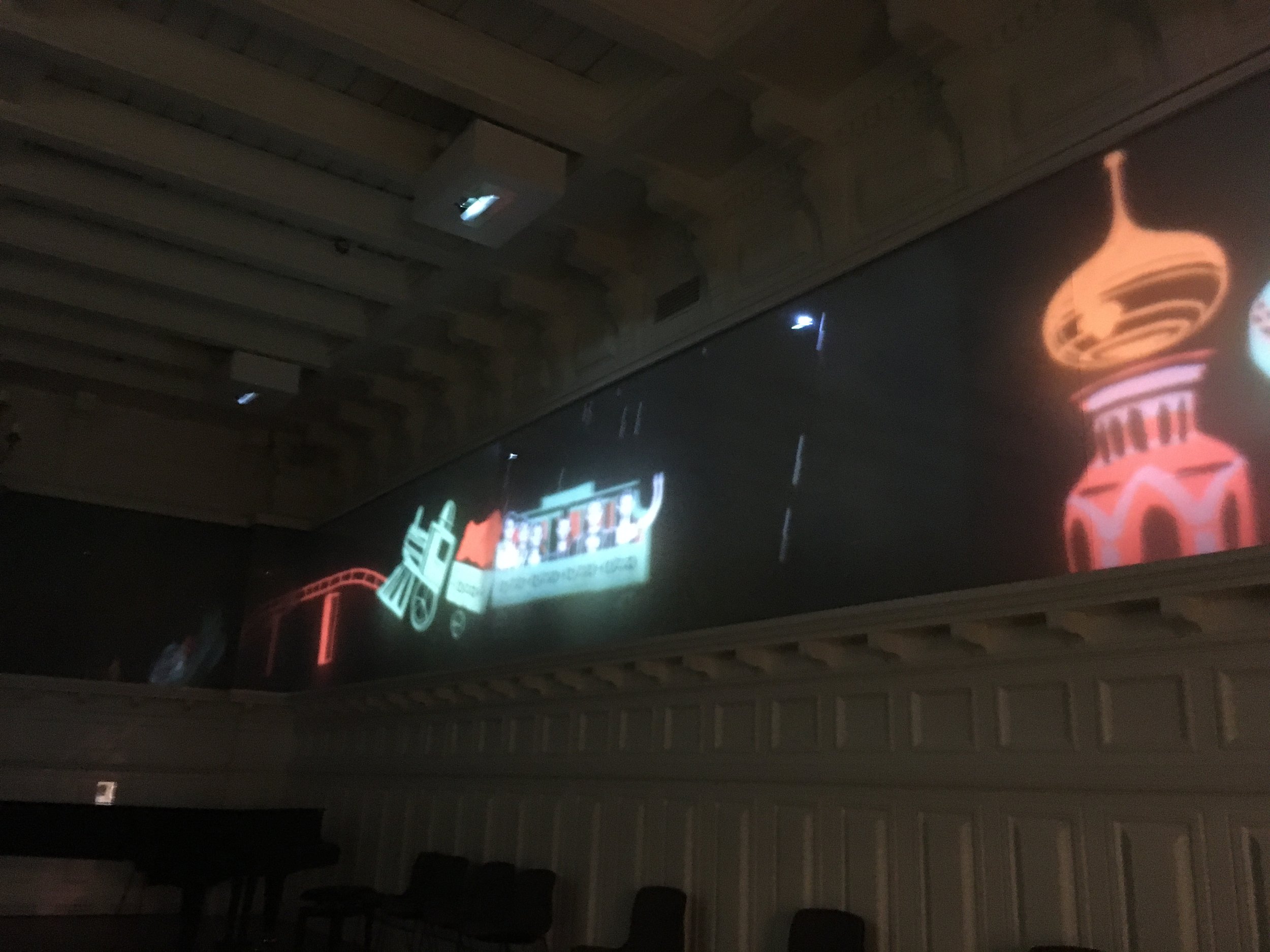
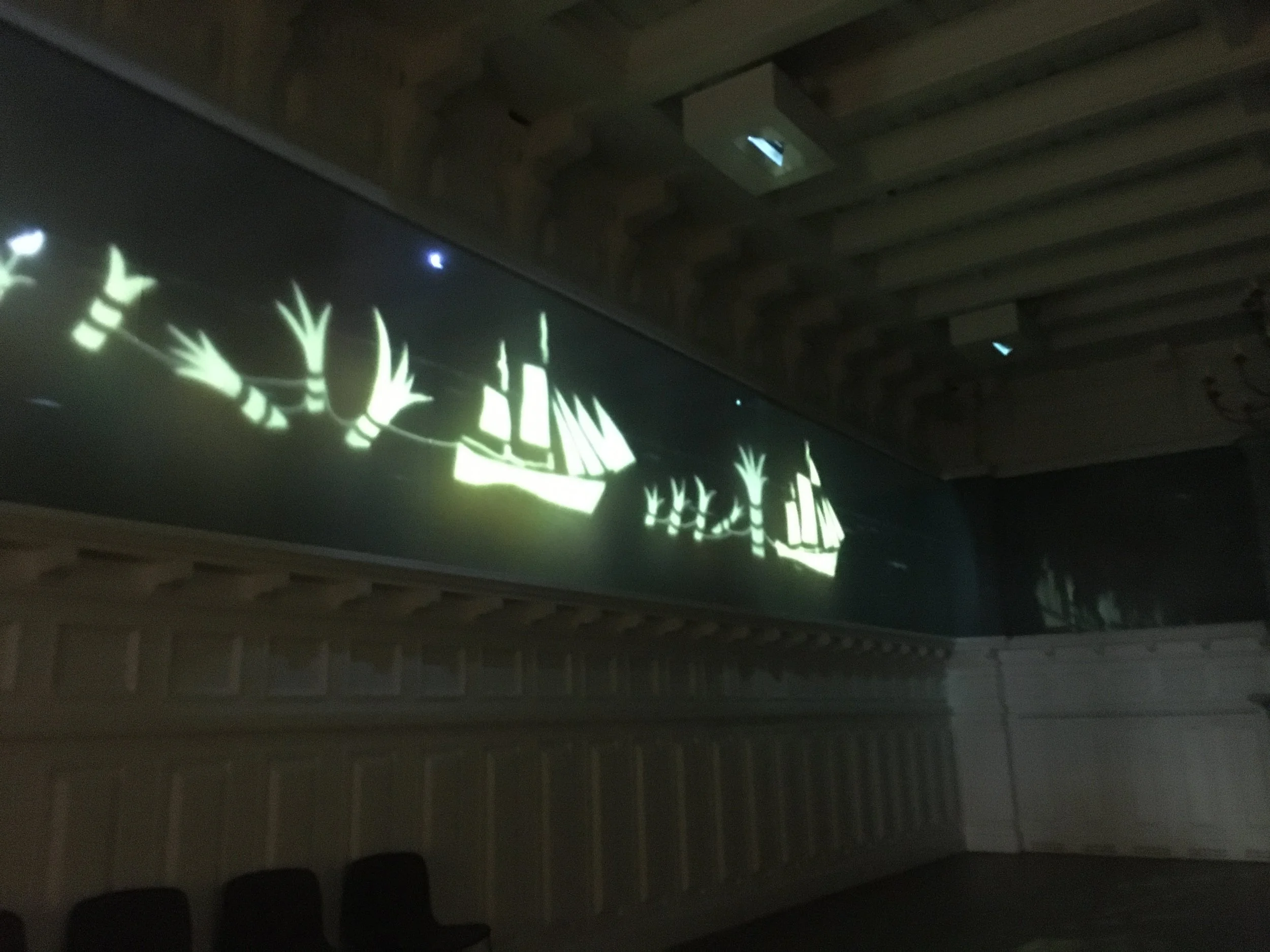
Christopher Nolan watched it when he was he was over here filming Tenet, and I’m reliably informed he thought it was very good. Which is logical because it is. But how about that for a vouch of quality.
And if you’re into palindromes since the film, here’s one for you: samas - it means “ the same” in Estonian. And if it’s all samas to you, I’d like to mention two things still: a little bit of cinema and a national hero.
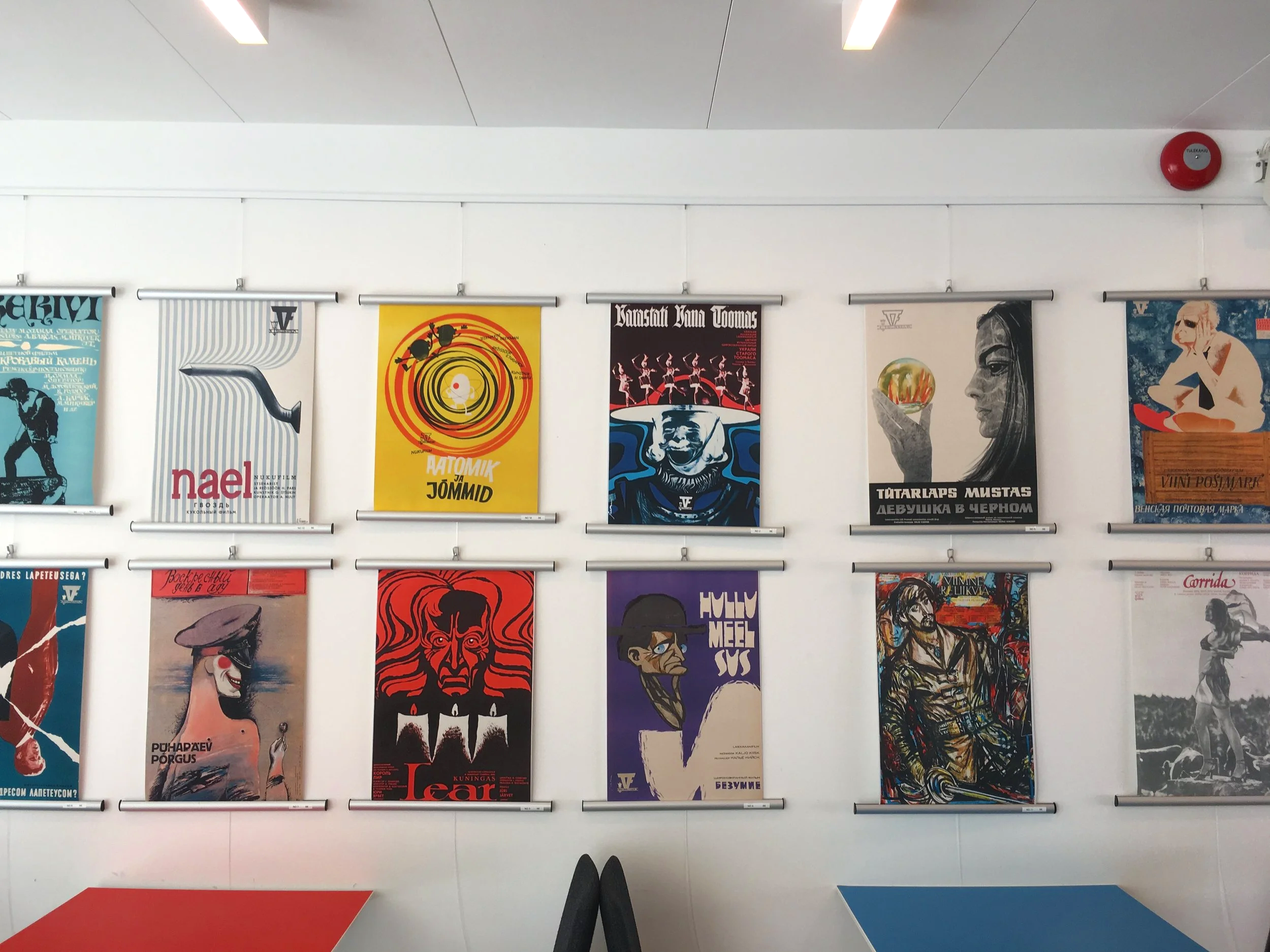
So.. you like niche movies ?
Welcome to the cafeteria of the Estonian film museum. A nice place to sit down and look at posters. You can choose one from the image above. The one that piques your interest. So you know, there’s only one correct answer.
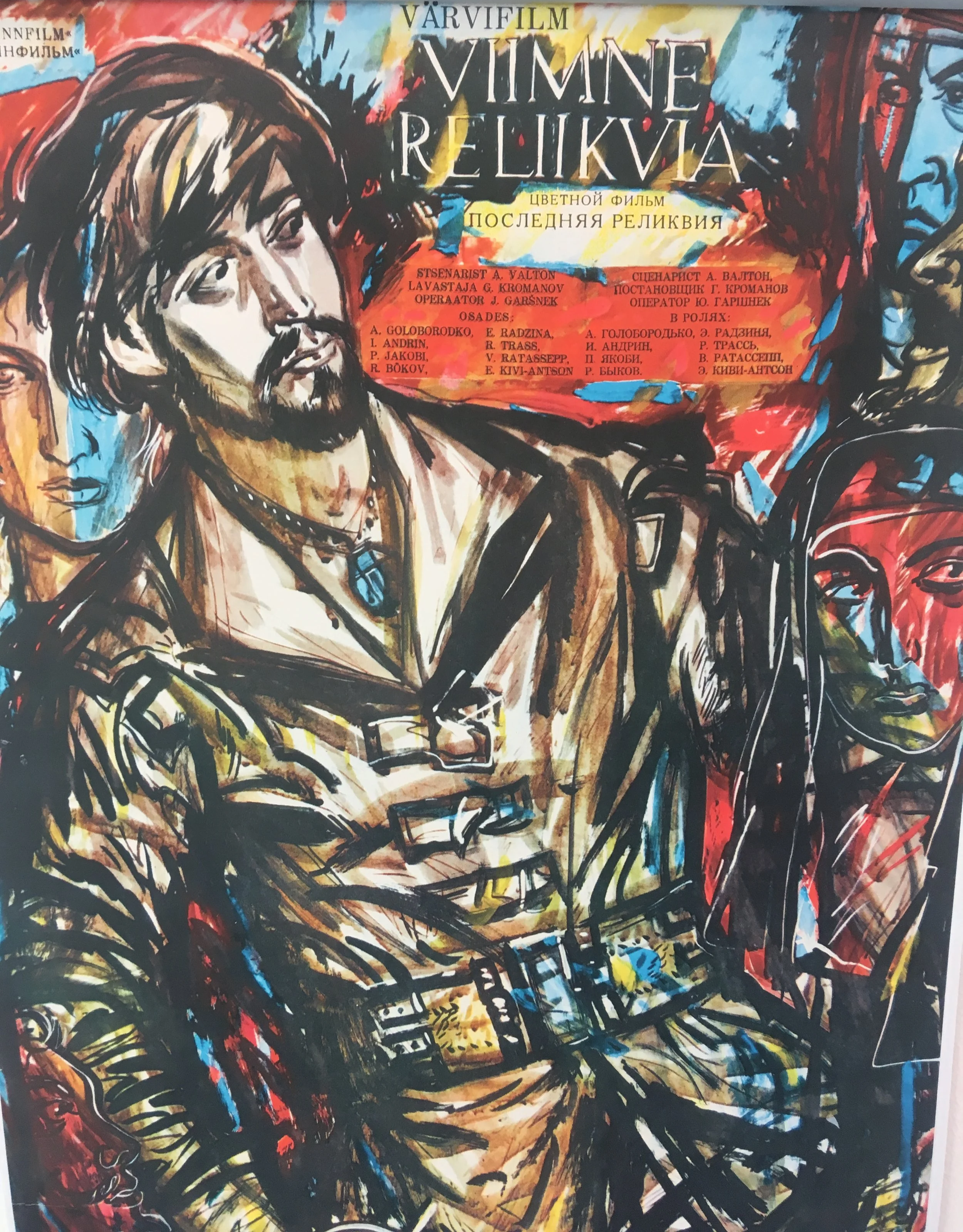
A living relic of Estonian Cinema
Oh yes, you guessed it right and what a choice. It’s a brilliant tale of trust and betrayal, handsome heroes and cunning villains: The Last Relic.
A quest for unaligned, unconditional freedom, that a man (and his blonde & brave love-interest) may live as candidly as birds. The film’s plot and music are in fact a brazen call to liberty throughout. Stunning, considering it came out in 1969 and was funded by the Soviet Union.
This cinematic ode to bravery and independance beat all records in cinemas nationally and USSR-wide.
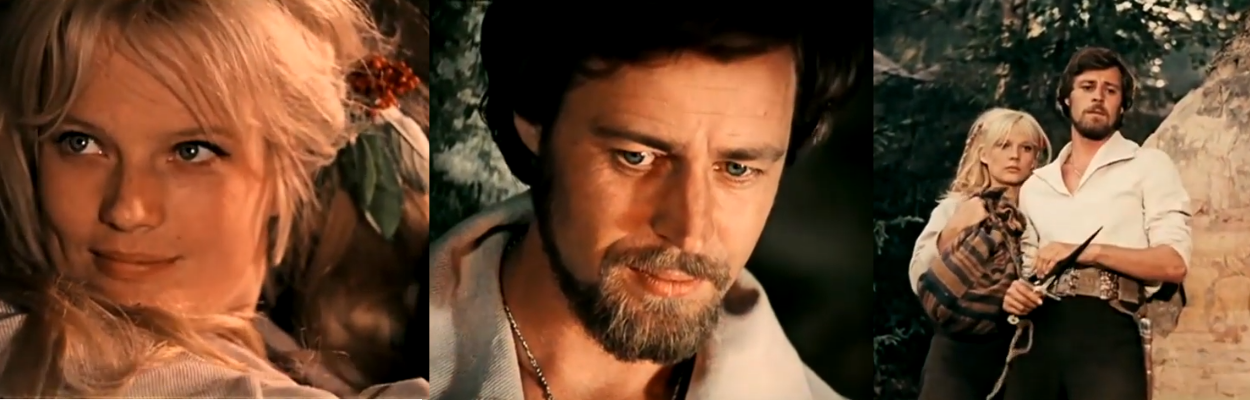
Latvian Ingrīda Andriņa and Russian/Ukrainian Aleksandr Goloborodko spoke their lines mostly in Russian during the filming.
The studio-dubbed audio of the film is unusual to a modern-day audience but not a barrier to enjoying the film. Furthermore, the powerful songs impress onto various scenes a shining message of strength and sweetness.
The poet behind the lyrics of these powerful songs is Paul-Eerik Rummo, a blue-eyed gentleman who twice served as minister in Estonia between 1992 and 2007, after standing as a defender of the Estonian language while it was most threatened during the 80s. And after writing these lyrics of course.
(wait I’m not done) Not only that, his wife Viiu Härm, also a poet among other callings, is the lady you can see looking into a glass ball, top row, fifth from the left, among the posters. Both these poets were born in Tallinn during German occupation, lived their young bristling years on the cultural scene of a country under the control of the USSR, and saw the rebirth of Estonia in their later years. Those life-stories too must be quite the odes to freedom.
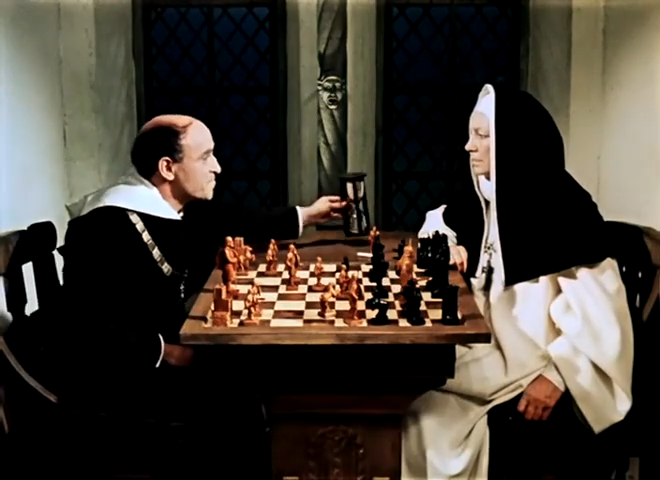
Russian Rolan Bykov, playing chess and the system as the villain
The film’s plot revolves around the sacred relics of St Brigitta, and the political power they can wield over others.
As the closing thought of an article that took me months to write, I’d like to point out that the film suggests that Brigitta’s relic is “the last”. But anybody seeking power will produce a relic in front of the eyes of their target audience. This could be a sacred object, this could be a deified dictator, or even an abstract and moldable idea like a “Republic” such as in my country. Some say it could even be the alarmist gesticulations of politicians inspiring a population to deeply fear a neighbour. For a fistful of power and pockets full of gold. Imagine that.
Let us hope that such relics can one day stay in the past, to be replaced by virtue, freedom, and all the other topics of the songs sang so heartily by Estonian folk singer Peeter Tooma in the film.
Above all, the world needs
one free child, one free child
who has heard nothing
of good or evil, neither good nor evil,
and doesn’t even bother to think
about the captors’ lure.
But it is precisely a free child
that the captors need.
Flee, free child!
That’s the only chance.
Flee, free child!
Take the freedom of the world into hiding,
as long as you can even a little,
as long as you still somewhat hope,
as long as you still somewhat care —
flee, free child. (extract - Lyrics by Paul-Eerik Rummo)
Listen to this one song, or watch the whole film here.
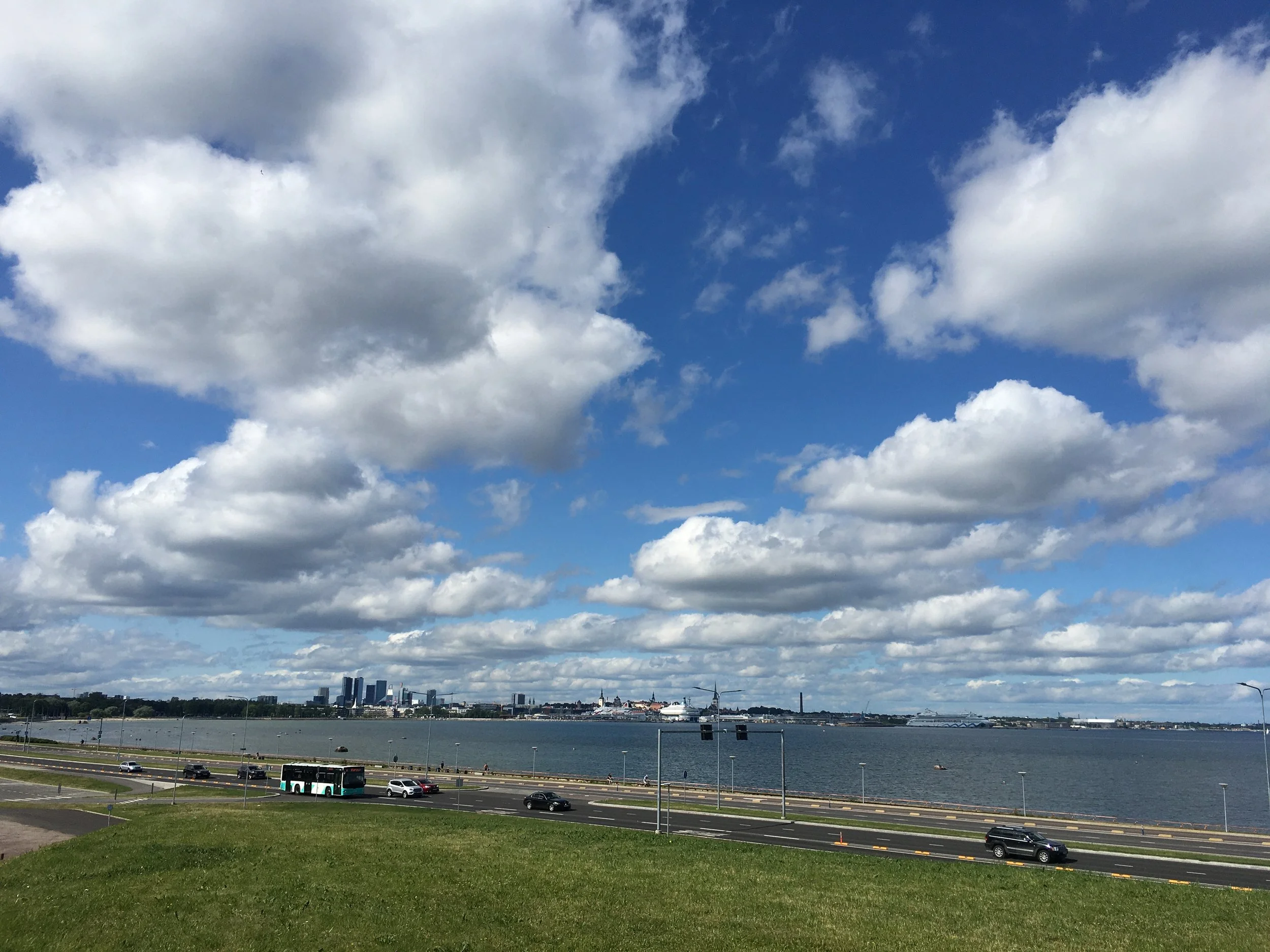
Tallinn awaits! It’s an e-STONEia’s throw from this place. Walk or drive, samas samas.
Support this adventure ! Somehow or other, you’ll figure it out. You’re FREE to do as you please.