How to canon - Percé, Québec

1 Comment

How to canon - Percé, Québec

This Blog Post read out loud, so you don't have to

There's lots to discover and marvel at in the beautiful region of Gaspésie. From walking through a quiet and deserted national park at night, to admiring big pierced rocks from the shore, it's got it all. Well, it's got some of it. It's got nature, and a quite cold sea. So that's something.

Up a frosty road where everything almost went terribly wrong with my toyota's summer tyres. But didn't. Ouf!

Up a frosty road where everything almost went terribly wrong with my toyota's summer tyres. But didn't. Ouf!

It's definitely got it history-wise, with the indigenous Mi'kmaqs hunting and fishing on these lands for melleniums. And then come the eventful "discovery" period of these lands by European explorers such as every Québec-er's favourite Jacques, Jacques Cartier.

"MMMmh..." ponders J.C. "I wonder when I'll feature in a song"

"MMMmh..." ponders J.C. "I wonder when I'll feature in a song"


Considering how interesting these topics seem, there's a fair chance I'll have the pleasure of talking about these in the upcoming Ukulele Road Trips Blog posts. But for now, I wanted to show you around backstage of the adventure. That way, if anybody else wants to write and record on a beach a multi-voice historical inspired ukulele piece, you'll know how it's done.

Because you might now also want to write a XVIth Century French-styled three part canon sang from the point of view of a cartographer appointed by the King of France to find a path to Asia through the cold valleys of Québec. It just might happen you feel like it!

So if this happens, this is how to you could go about it.

BEHIND THE SCENES

1. The air that lives there

First comes the visit of the location, and breathing the air that lives there. Personal experience of the location of your topic is paramount to your inspiration.

IMG_1058.JPG
 

Having had a look around, and sat in the wind and the mild sun looking at the pierced rock for a bit you may start to feel inspired. But once you feel freezing, because it's Québec in Winter, of course you'll rush back to the rental car and switch the engine on to get some heating. Rub your hands together and blow in them once the engine turns on, for dramatic effect.

Even in the automobile, the use of the winter hat is recommended. A Icelandic Zo-on if you're wondering...

Even in the automobile, the use of the winter hat is recommended. A Icelandic Zo-on if you're wondering...


2. First notes

There, in the comfort of your Toyota, you may start improvising and getting historical characters coming to you in ghostly visions. That's not what happened to me though. Thank God. However, It did surprise me a lot that I ended up writing a XVIth century style canon. So if ever you notice your composition taking on the style of a century very relevant to the place you are visiting, don't worry, it's because of the air that lives there and that your did breathe.

You might want to use the left over 22% of your laptop's battery to figure out how the different melodies will work out together. But be quick, without a power outlet anywhere near, time is ticking!

tic toc tic toc...

 
What the canon sounds like, when not on a beach

3. Practice makes perfect... -ish

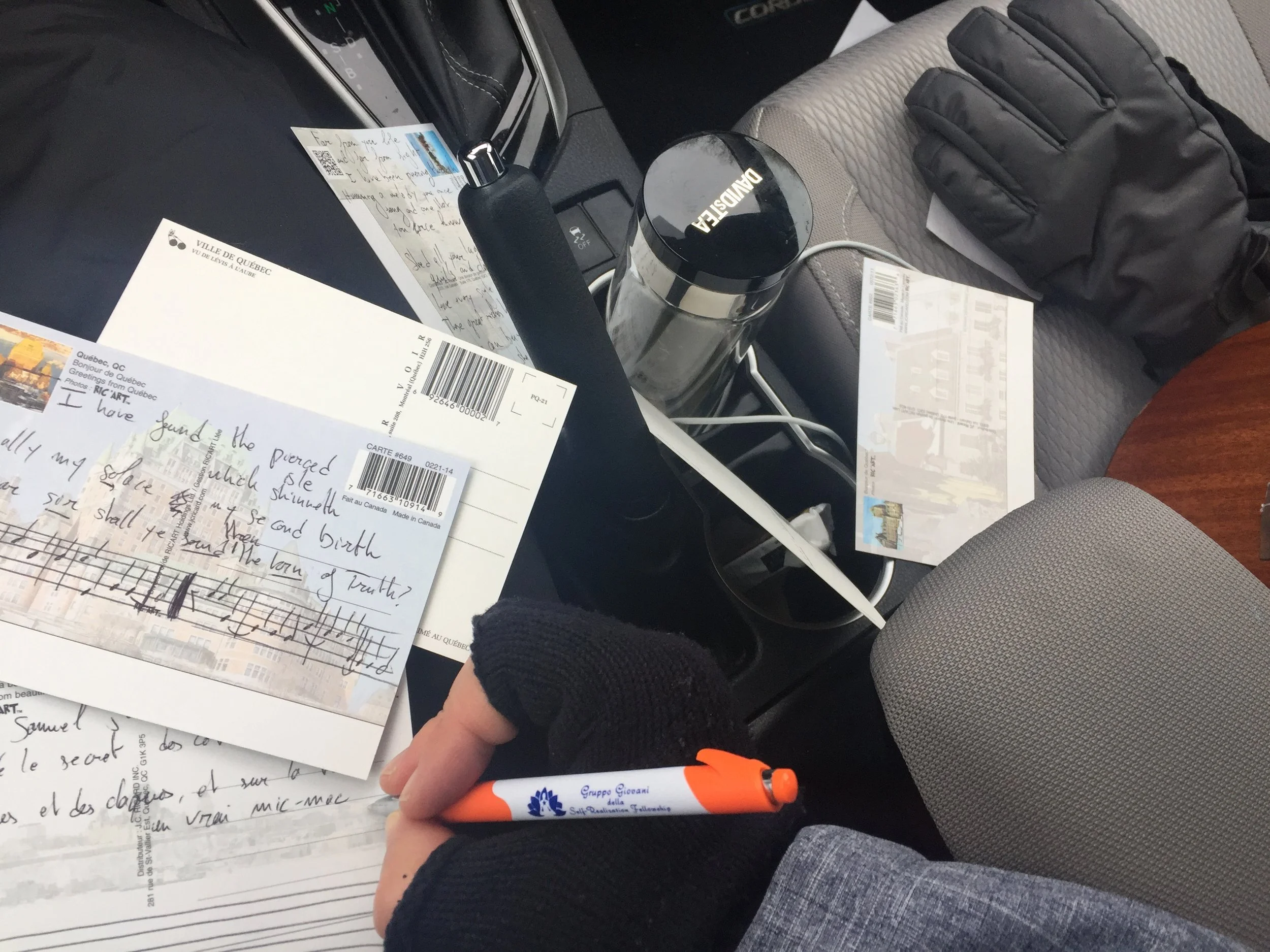
Then you must rehearse your canon. It's not easy to learn, let alone compose, but a couple of hours should do the trick. If that doesn't work, try writing every part of the catch (or "canon") on separate postcards that you thought you were going to send, but nobody bought any from the homepage. Things work out the way they do for a reason ya'know.
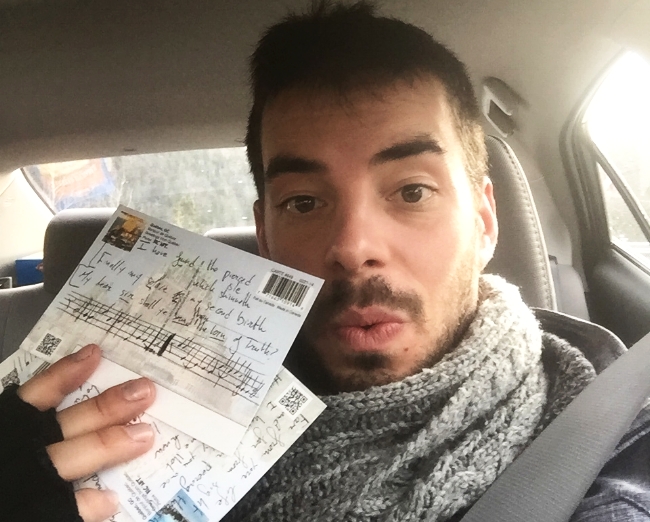
XVIth century style duck-face - with accompanying manuscripts

XVIth century style duck-face - with accompanying manuscripts


4. Shooting the canon

Action! Yes, after having tried spots with too much wind or not enough of a view, you must now walk down the land of a private property, hoping nobody's home, and slide down a part of the cliff that's not too steep, with your ukulele and your camera stand in hand(s).

Then just make sure you record the second and third part in perfect synchronicity with the first one, trying to not make too many mistakes (count a few attempts), hoping that the wind and the changing weather don't muck up your audio and video too much...

One,

One,

Two, ...

Two, ...

Three !

Three !

And, Voilà !

Not that much to it is there. Only a few days of head scratching, editing, assembling and such left. Peanuts. Or as Samuel would say, "quel Micmac!" ("What a jumble of all sorts of things, and what would my King make of this I ask you? And how do you even edit three separate films into one canony two minutes??").
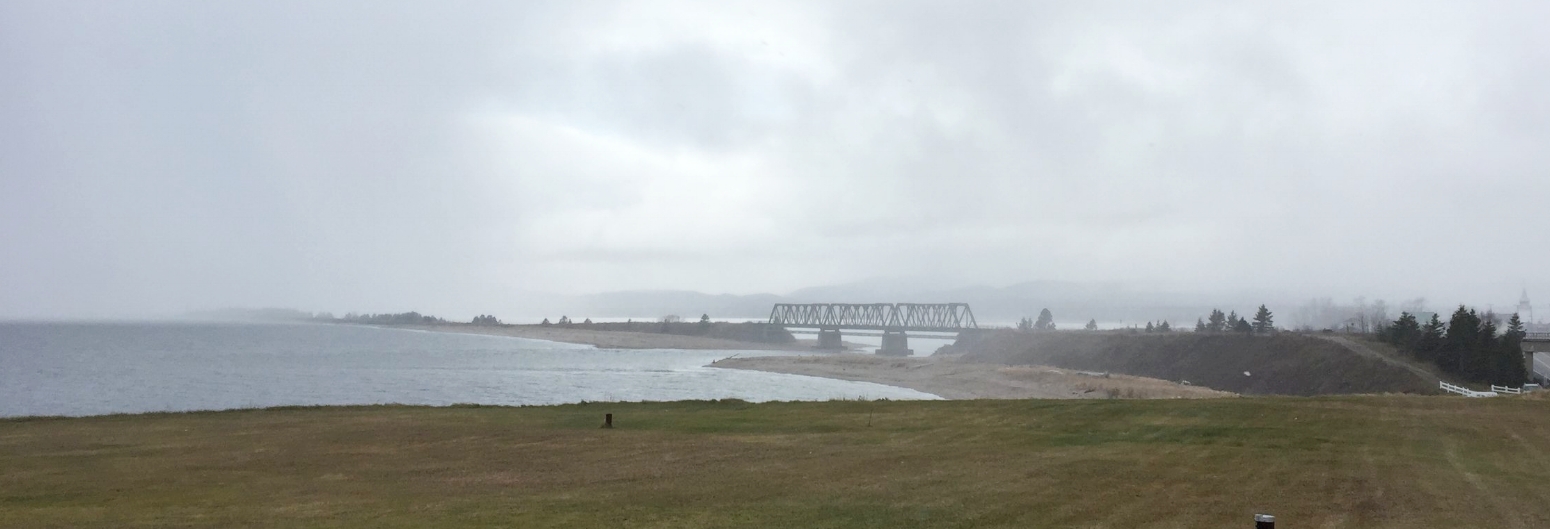
Looking back onto he road to Percé.

Looking back onto he road to Percé.

Thanks for reading ! And viewing. Maybe even listening.

If you enjoy these "behind-the-scenes" snippets of my adventures, you can click around on my Patreon page and get exclusive updates, like this one !

The nice people at Cloud Music Ukuleles  are making this canon-ing adventure #GoingNorth possible, have a musical stroll around their boutique if you're looking to buy a uke or equipment!

Fire your thoughts and canon-y comments in the section below! And I you feel so inclined, do share the content of this website on those big Social Media things, and, most of all, at family dinners. You can click on "share" just underneath here.

1 Comment

The Pierced Isle - Percé, Québec

3 Comments

The Pierced Isle - Percé, Québec

Fire the historical canon! Strike a match, and light the gunpowder of ukulele time travel!

Well done. You have now fired the historical canon. But you must know, it is not an actual canon, with big wheels and a loud BANG. It is a musical historical canon, where different melodies fit on top of each other in a (hopefully) pleasing way, sang by a historical character, who happens to play the uke.

Enter the stage, Samuel de Champlain! The man who named stuff in Québec.

This explorer travelled through Québec about 70 year after its earlier French "discovery" and in 1603, named a beautiful and uncommon pierced rock "The Pierced Isle" ("l'Isle Percée") upon his finding. Listen to Samuel take the beach across from it as his stage, and sing his joy upon glimpsing this fine rock


Moi Samuel, j'ai trouvé cette isle, percé le secret des côtes au fil des aventures et des claques,
"I Samuel I have found this isle, pierced the secret of the coasts along my adventures and hardships,"

Thanks for the melody Samuel.

there is no accurate portrait of Samuel, so all you're getting is a bit of his handwriting.

there is no accurate portrait of Samuel, so all you're getting is a bit of his handwriting.


Samuel de Champlain, born on the coast of France, would be the navigator and cartographer to name and map out a lot of the coast of Québec, including the banks of the river St Laurent. However, his claim to fame in Québec hearts is more linked with him being appointed Vice-Roy of New France (Nouvelle-France, a name he came up with, smart fellow).

Map made by Sam in 1612 which includes lots of drawings, which is nice. As you can see, at the time, the boats used to be really huge in comparison with the size of the land. Click to expand and use it instead of a GPS.


Acting as governor, he pushed many years for the establishment of a French colony from the pierced isle onward. At the end of his life in 1635 he finally started to see his dream materialise. A second birth of the French crown as its people settled across the ocean.

I have found the pierced Isle which shineth, finally my solace, my second birth

I'm not big on titles, but personally, if I were ever to get one, I really hope it's Vice-Roy of New-France. Sounds fantastic. And New-France (or Québec as it's now called) is really quite nice as you can see.

The Gaspésie coast in the morning light, on the way to the pierced rock of Percé

The Gaspésie coast in the morning light, on the way to the pierced rock of Percé

 
"le territoire des sauvages Mi-kmaqs, c'est la terre promise, Tabarnak!"
"the land of the savages Mi'kmaqs, it's the promised land, [untranslatable]!"

Of course we say that French explorers discovered Canada and Québec. But really, that's a bit of an odd one, because, there were already people there! That always annoyed me at school.

The local "savages", as depicted by Samuel de Champlain. It's the same map, but you noticed that. I zoomed in for your comfort.

The local "savages", as depicted by Samuel de Champlain. It's the same map, but you noticed that. I zoomed in for your comfort.


These "savages" are the Mi'kmaqs, or the Mi'gmaq as they call themselves. And they were here slightly before my French countrymen. About 10,000 years, when humans crossed over from the other side of the continent, via Siberia. And so they already had their own names for places by 1603, including one for the stage of the canon: Sigsôg, litterally "steep rocks". Who doesn't like a nice obvious simple name?

On the banks of Sigsôg, a ukulele has a deserved little rest.

On the banks of Sigsôg, a ukulele has a deserved little rest.


since you're here,

I hope you enjoyed this post and song, 

If you did , you can show your support to Ukulele Road Trips on Patreon with just 1$/month and be a Patron of this unusual joyful adventure along coastlines and hardships.

The nice people at Cloud Music Ukuleles  are making this canon-ing adventure #GoingNorth possible, have a click around if you're looking to buy a brand new ukulele

Fire your thoughts and canon-y comments in the section below!

Driving away from the canon's scene. If you look closely to the bit of land in the middle, you can notice a small arch under the isle on the left side, an arch that gives it's name to Samuel's "pierced isle"

Driving away from the canon's scene. If you look closely to the bit of land in the middle, you can notice a small arch under the isle on the left side, an arch that gives it's name to Samuel's "pierced isle"

3 Comments

Late Night in Gaspésie's National Park - Québec, Canada

3 Comments

Late Night in Gaspésie's National Park - Québec, Canada

Night. Sleep. Silence. Everything quiets down in the Winter months in Québec, and as you cross Gaspésie's National Park at night, it does feel like the whole region is fast asleep.

Not a moose in sight

Not a moose in sight


A moment to reflect and to offer a lullaby to sleepers from other time zones. In the vast and completely deserted National Park of the Québec Peninsula, the feeling that the whole world is in a deep sleep, sets in.

You're very much like these trees [fast asleep], Six time-zones away from these [melodies], may they find you [in your dreams]

Let your Rêveries, and your peaceful slumber, be scented with words from your dearest lover,


Comme le sommeil infin [de Gaspésie], si paisible si loin d'ici, rêve de moi ou de mots [qu'je t'ai dit]

"Like the infinite slumber of Gaspésie, so peaceful, so far from here, dream of me or of words I shared with you."

A peninsula, if you're not familiar with the term, is a area of land, not quite an island but still surrounded by a lot of water. And East (and North) of Québec City, lies the huge almost-island that is Gaspésie.

A view of the night-time coast-line south of the National Park.

A view of the night-time coast-line south of the National Park.


This region of Québec is actually bigger than the country of Belgium, and that's where these ukuleles are carrying on their Northern Adventure. Gaspésie. Not Belguim. And in the heart of it, right where Brussels should be, only trees, light snow, and the company of a few rivers, and entertainingly, a ukulele or two.

On a big adventure, ukulele needs rest too

On a big adventure, ukulele needs rest too


You can support Ukulele Road Trips on Patreon

The nice people behind Cloud Music Ukuleles  are making this adventure #GoingNorth and its lullabies possible

Share your thoughts and sleepy feelings in the comments below !

3 Comments